
What Happens to Our Fabric Scraps? How Pete Sews Recycles With UPPAREL
Sewing creates fabric scraps. Quite a lot of them, actually.
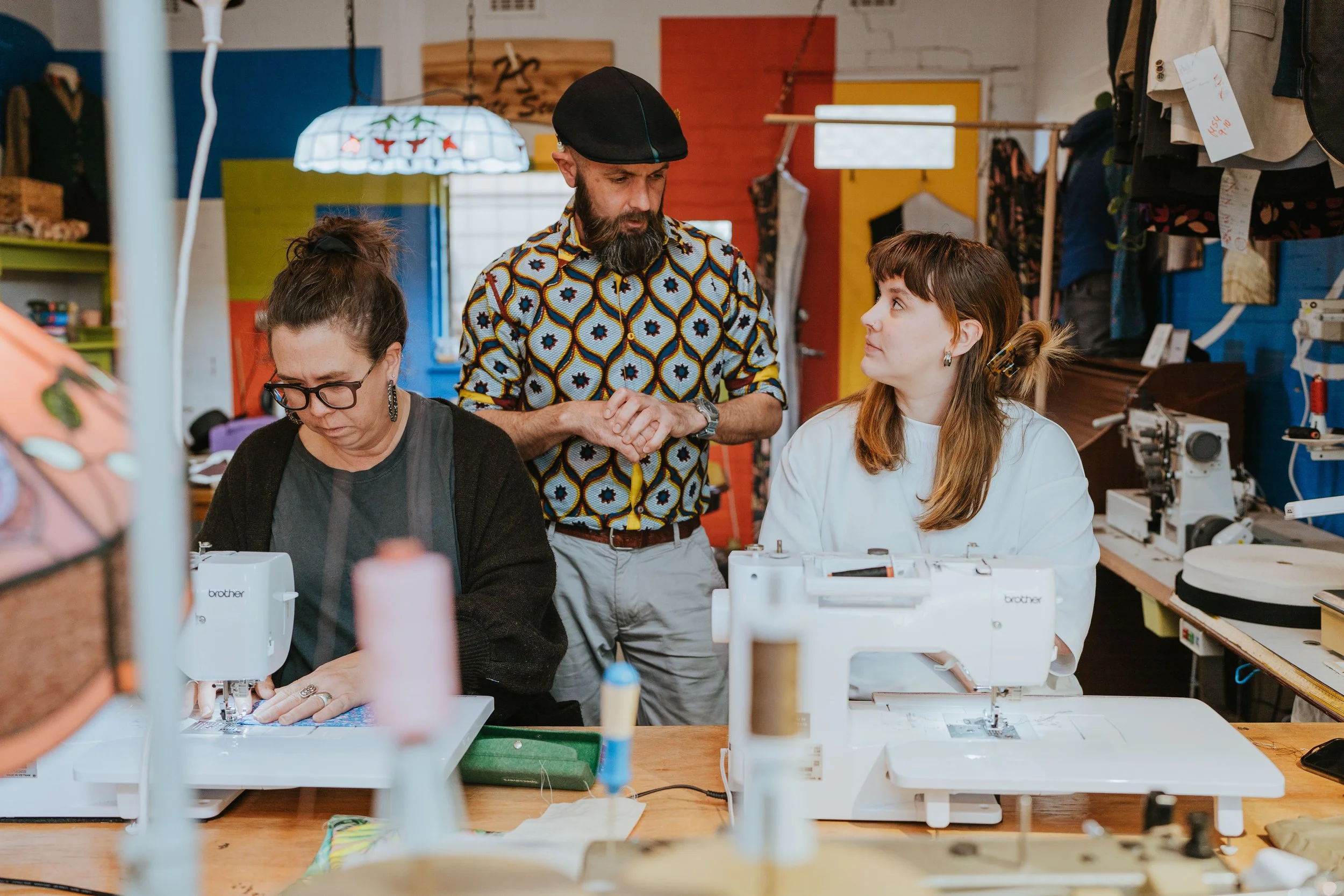
Between sewing classes and clothing alterations at Pete Sews on the Mornington Peninsula, there’s always leftover fabric. Some pieces can be saved for another project, but others are simply too small to be useful.
For years, I’ve been collecting those scraps and sending them to UPPAREL for textile recycling. I couldn’t justify throwing perfectly recyclable materials into landfill, especially when I knew how much fabric waste my business was generating.
This year, Pete Sews became an official UPPAREL business partner, making the whole process easier and more affordable.
But the recycling itself isn’t new. It’s something I’ve been doing for years, and something my sewing students are often pleasantly surprised to hear about.
So, here’s what actually happens to all those leftover bits of fabric.
Why I Started Recycling Fabric Scraps
If you’ve ever made something from fabric, you’ll know there’s almost always something left over.
Pattern cutting, trimming seams, hemming trousers and making alterations all create offcuts. Some are big enough to keep, but plenty aren’t.
Now imagine that happening across multiple sewing classes and clothing alterations every week.
It adds up surprisingly quickly.
Rather than sending all those scraps to landfill, I wanted to find a practical way to deal with them.
That’s how I started using UPPAREL, an Australian textile recycling company that helps keep unwanted textiles in circulation by turning them into useful new materials.
It wasn’t about having a sustainability badge on my website. It was simply about doing something better with the waste my business produces.
How Fabric Scrap Recycling Works at Pete Sews
Our recycling process is pretty straightforward.
We collect leftover fabric from two main areas of the business:
Sewing classes, where students cut patterns, practise techniques and create their projects.
Clothing alterations and repairs, where hemming, adjustments and repairs naturally generate fabric offcuts.
All those scraps are collected and packed into UPPAREL’s textile recycling boxes.
Each box holds approximately 25–30 kg of textiles, which is a surprising amount of fabric when you’re dealing with little offcuts!
Once a box is full, usually every two to three months, I organise a courier collection through UPPAREL.
They collect the textiles and take them away for recycling.
It’s a simple system that allows us to manage our fabric waste without sending it straight to landfill.
Our Partnership With UPPAREL
Although I’ve been recycling with UPPAREL for years, Pete Sews officially became a business partner in 2026.
The partnership gives us access to more affordable textile recycling and makes organising collections easier.
For a small business that generates fabric scraps every week, that makes a real difference.
It means I can continue doing something that’s important to me without making the process unnecessarily complicated or expensive.
And while I’m pleased to have the official partnership, what matters most is knowing we’re making a genuine effort to reduce the amount of textile waste our business sends to landfill.
What Does UPPAREL Do With Recycled Fabric?
This is one of the questions that often comes up when I explain our recycling process to students.
What actually happens to the fabric once it leaves Pete Sews?
UPPAREL processes discarded textiles into recycled materials that can be used to create new products.
One of these materials is called UPtex, which is available in three formats: felt, cushion and board. Depending on how they’re processed, recycled textiles can find a new purpose in products such as laptop cases, desk mats, signage, packaging and interior materials.
It’s pretty clever when you think about it. Those little fabric scraps could eventually become part of something completely different, rather than ending up in landfill.
These materials can be used in a variety of applications, including:
Signage and packaging
Interior products and finishes
Acoustic applications
Felt products such as laptop cases and desk mats
Boards used for cladding and other applications
Rather than seeing every leftover piece of fabric as rubbish, textile recycling gives those materials another opportunity to be useful.
What Does This Mean for Our Sewing Students?
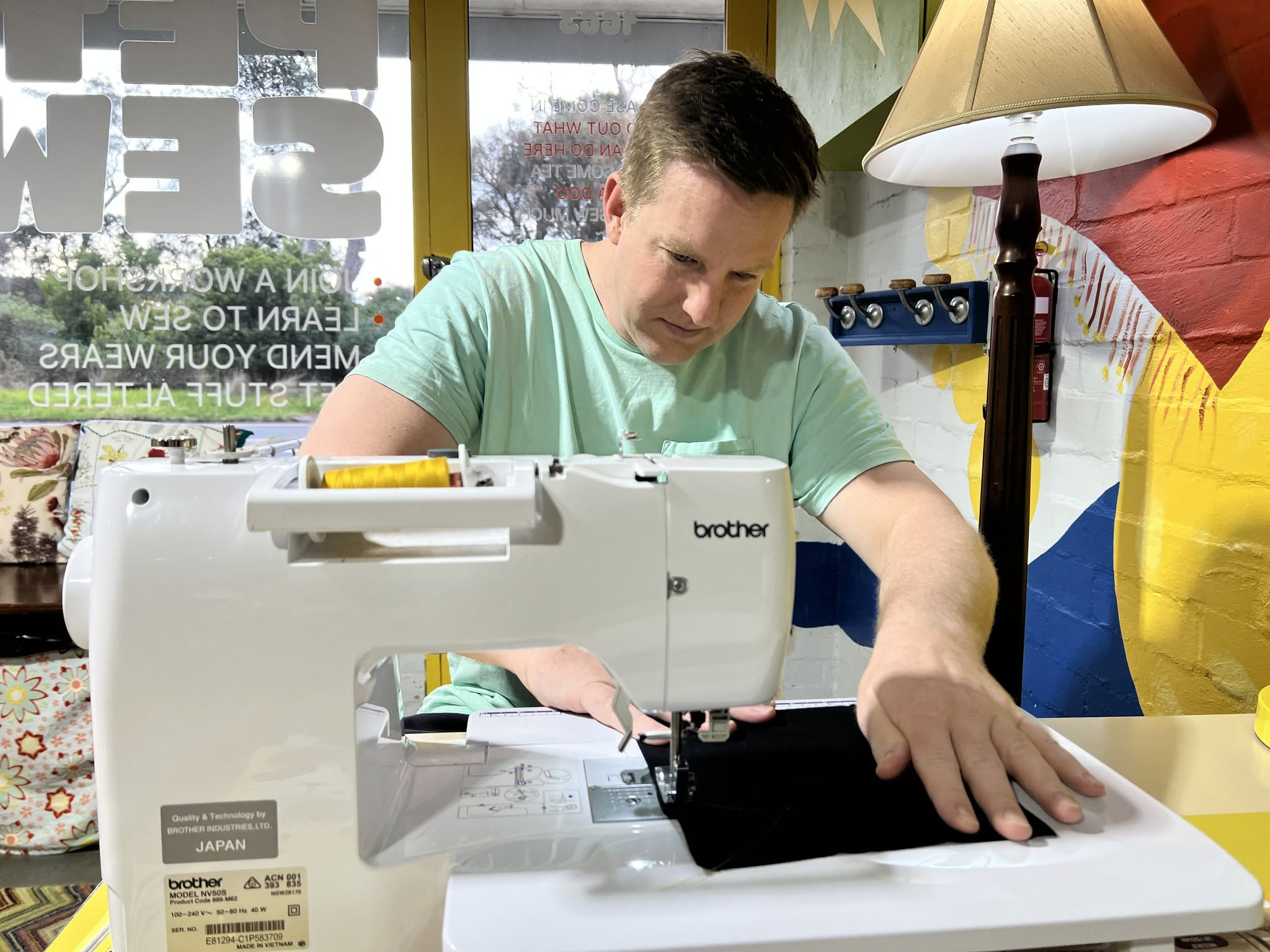
One of my favourite things about teaching sewing is watching people gain confidence as they learn something new.
But learning to sew also means making mistakes, cutting fabric, trimming seams and occasionally starting again.
That’s all part of the process!
Naturally, there will be scraps left over.
I regularly explain to students that we collect the leftover fabric from our classes and send it away for recycling.
And people genuinely appreciate knowing that.
Some students have already heard of UPPAREL, while others are curious about how the recycling works. I’ve even had people ask for their details so they can organise textile recycling at home.
I think it’s reassuring for students to know that the fabric scraps generated while they’re learning aren’t simply being thrown away.
When you attend one of our sewing classes in Capel Sound on the Mornington Peninsula, you can concentrate on learning, creating and enjoying yourself.
We’ll take care of collecting the leftover fabric.
Can You Recycle Fabric Scraps at Home?
Absolutely worth investigating!
If you sew at home, you probably have a collection of leftover fabric somewhere. Maybe it’s a bag of offcuts, a drawer full of pieces you might use one day, or fabric from projects that didn’t quite go to plan.
Before throwing anything away, consider whether it could be:
Saved for smaller sewing projects or repairs
Used for patchwork, appliqué or other creative projects
Passed on to someone who could use it
Sent to a textile recycling service
Not every fabric scrap needs to be recycled immediately. Sometimes the best option is finding another use for it first.
But when you’ve got fabric that genuinely can’t be reused, textile recycling may be an alternative to landfill.
You can visit the UPPAREL website to explore their recycling services and check which textiles they currently accept.
It’s also worth checking their collection options and requirements before sending anything away.
A Small Part of How We Do Things at Pete Sews
I’m not suggesting that sewing can ever be completely waste-free.
Fabric scraps are part of the process, whether you’re making your first cushion cover, learning to use a sewing machine or having your favourite trousers altered.
But I do think we can be more thoughtful about what happens to those materials afterwards.
For me, recycling our fabric scraps is simply part of running Pete Sews responsibly.
It’s something I’ve done for years, and I’m pleased our partnership with UPPAREL makes it easier to continue.
And if it encourages a few more people to think twice before throwing away their leftover fabric, that’s a pretty good outcome too.
Come Sew With Us on the Mornington Peninsula
Whether you’re completely new to sewing or looking to improve your skills, Pete Sews offers friendly, hands-on sewing classes in Capel Sound on the Mornington Peninsula.
Come along, learn something new and enjoy making something yourself.
And don’t worry about the leftover fabric scraps. We’ve got those covered.
Explore our sewing classes or call 0410 178 801 to find a class that’s right for you.